

The RTX 2060 SUPER & RTX 2070 SUPER arrive to take on the Red Devil RX Vega 56 & the liquid-cooled RX Vega 64 in a 40 game Mega-review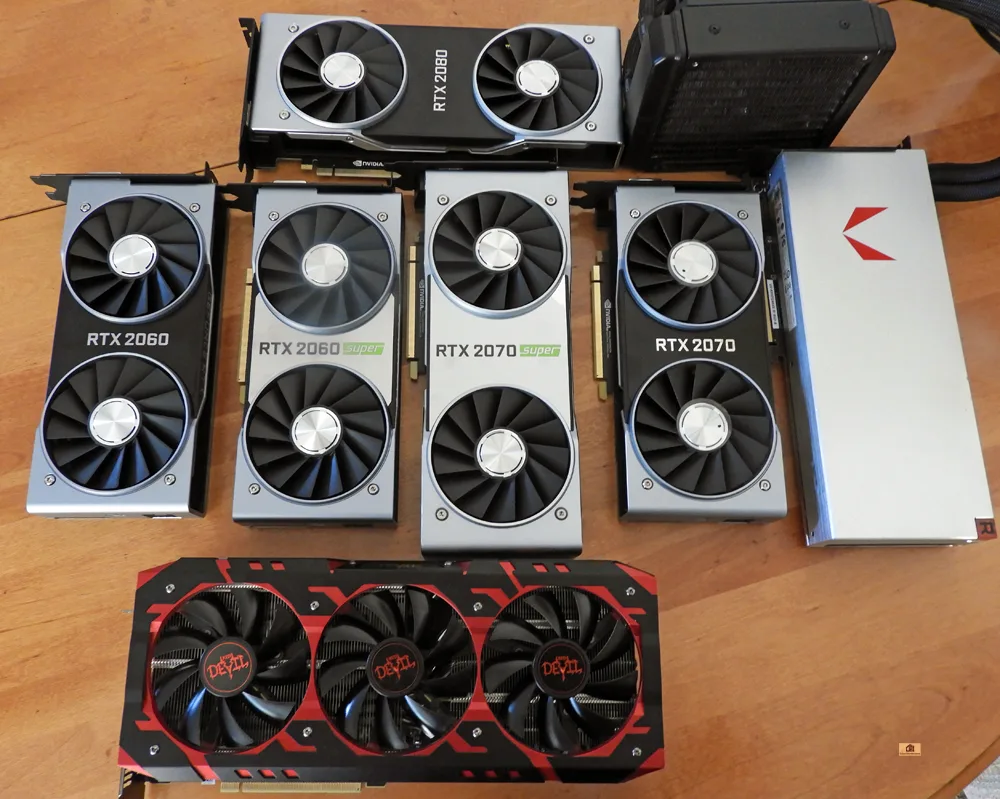
The GeForce RTX 2060 SUPER and the RTX 2070 SUPER are the sixth and seventh GPUs based on NVIDIA’s Turing architecture, and they will launch for sale on July 9 at $399 and $499 respectively. A RTX 2080 SUPER has also been announced for July 23 availability at $699 and we hope to review it. Each of these ‘super’ cards are an upgraded refresh of the current original RTX cards bringing more performance for ray traced games.
The original RTX 2060 will remain at $349 as the entry-level RTX card, but the original RTX 2070 and the RTX 2080 will become subject to market pricing as they are phased out in favor of the more powerful Super varieties. And for a limited time, starting on July 9, qualifying purchases of a GeForce RTX 2060 SUPER, GeForce RTX 2070 SUPER, or GeForce RTX 2080 SUPER- based graphics card will include digital key codes for two upcoming games that support real-time ray tracing, Control and Wolfenstein: Youngblood.
NVIDIA has decided to go with a ‘Super’ naming scheme instead of their more usual ‘Ti’ designation for an upgraded card. We may speculate that if NVIDIA had picked ‘Ti’ instead, they would not have been as readily able to phase out and replace their original RTX 2070 and RTX 2080 with the Super cards.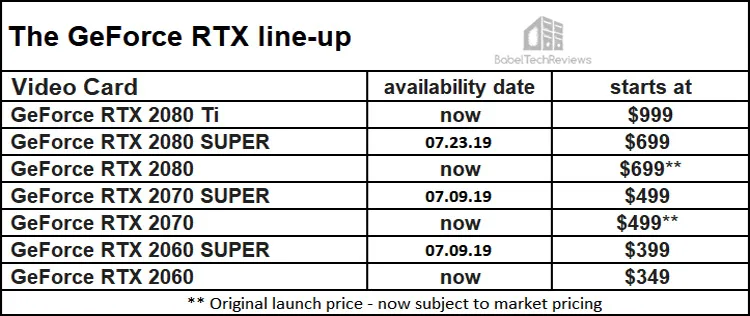
We are going to test the new Super cards’ performance versus the original cards, against the RTX 2080, and versus the RX Vega 64 and RX Vega 56. Before we use our benchmark suite of 40 PC games at 1920×1080 and 2560×1440, let’s first lets see what NVIDIA has upgraded.
The RTX 2060 SUPER
The GeForce RTX 2060 SUPER is based on the TU106 GPU and it boasts an increased core count, expanded memory bus, and 8GB of memory making for a solid upgrade over the original RTX 2060.
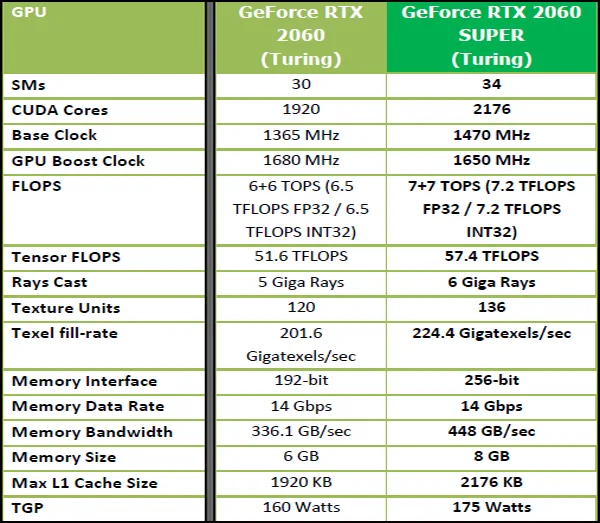
NVIDIA says that the GeForce RTX 2060 SUPER is just 1% slower on average overall than the original stock GeForce RTX 2070 at 1440p and we will test this claim.
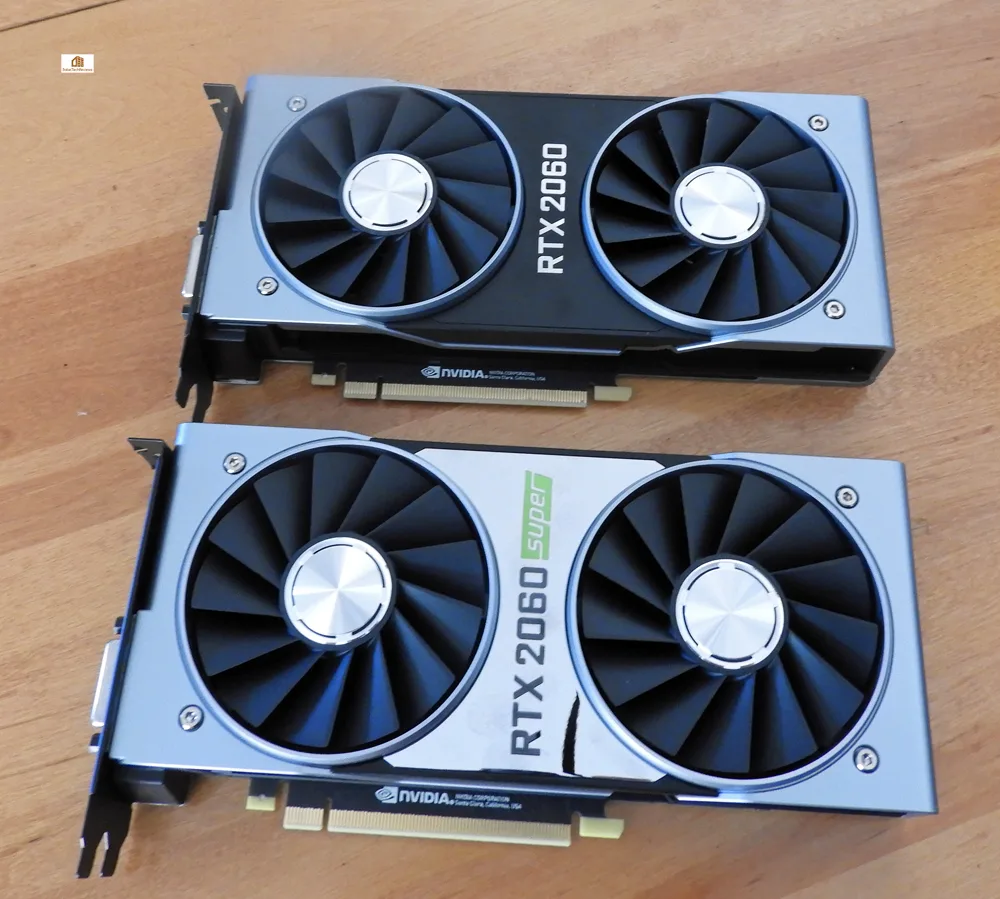
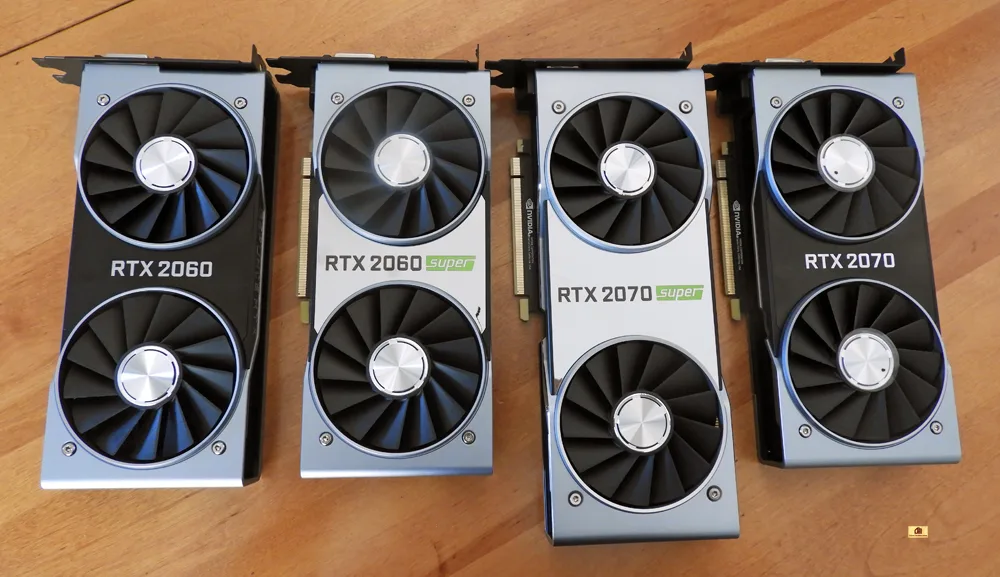
The Founders Edition cards are very similar in size and in every other outside physical characteristics including their backplate, cooling, and an 8-pin PCIe cable, with the primary difference being the SUPER logo. The RTX 2060 is priced at $349 and the SUPER will be $399 and both cards will coexist in NVIDIA’s lineup.
The RTX 2070 SUPER
The GeForce RTX 2070 SUPER is a derivative of NVIDIA’s TU104 GPU.
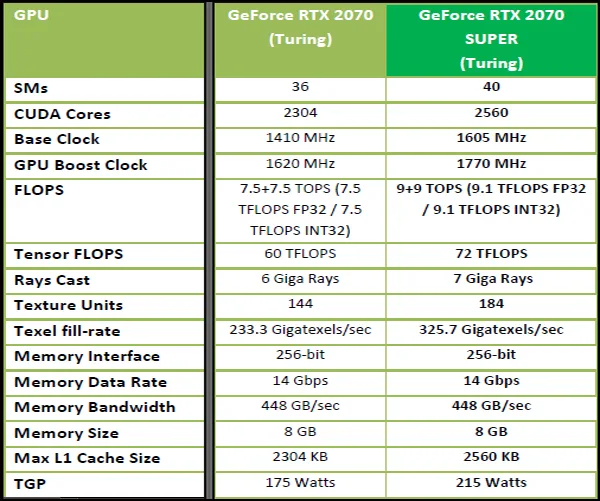
According to NVIDIA, the RTX 2070 SUPER is faster than the Pascal GTX 1080 Ti, and it’s also on average 16% faster overall than the original GeForce RTX 2070 at 2560×1440 resolution.
The RTX 2070 SUPER is a physically larger card than the original RTX 2070 FE.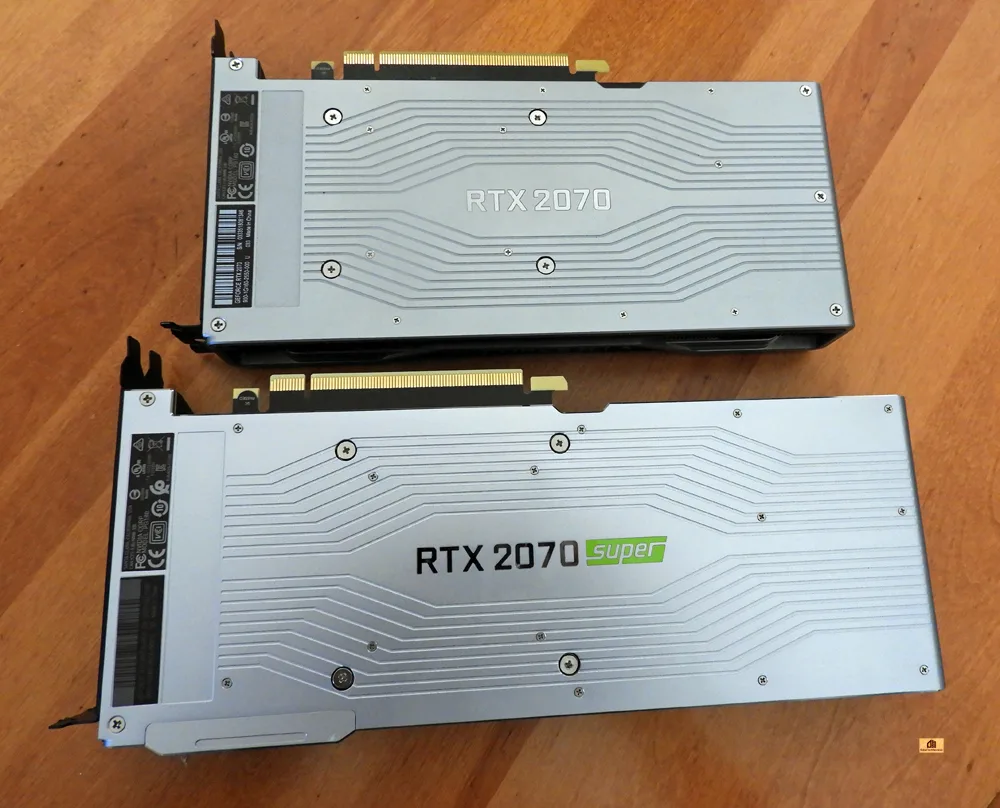
Although the original RTX 2070 FE uses a single 8-pin PCIe cable, the SUPER requires 6-pin+8-pin cables.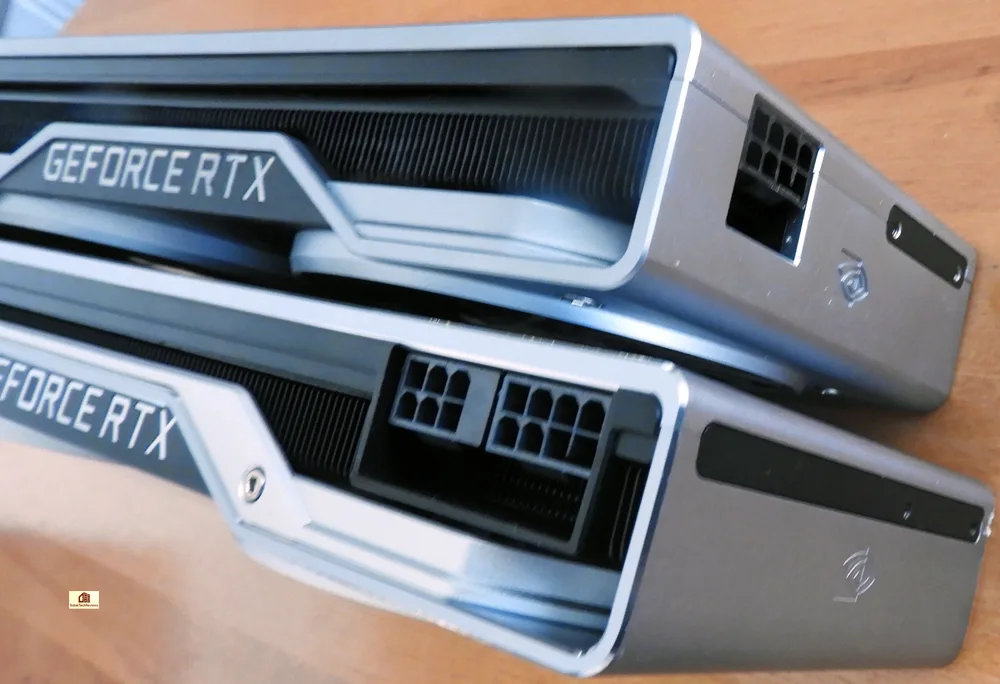
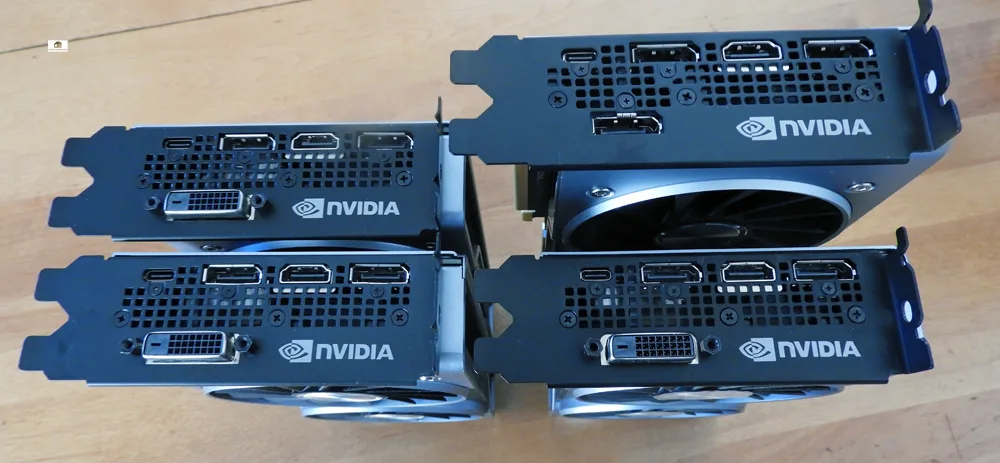
The connections are identical for both RTX 2060s, but the RTX 2070 SUPER Founders Edition has replaced the original DVI port with a DisplayPort.
Performance
We have had less than a week to evaluate the SUPER RTX 2070 and RTX 2060 SUPER so we have narrowly focused on their performance increases over the original cards. We also want to see how close the RTX 2060 SUPER at $399 performs compared with the original RTX 2070 which launched at $499.
Similarly, we want to see how much faster the RTX 2070 SUPER is than the original, and we want to see if it narrows the gap with the RTX 2080 FE which will be eventually also be replaced by a RTX 2080 SUPER. We have already tested Pascal versus Turing many times, and we know that the RTX 2080 is faster than the GTX 1080 Ti, and the RTX 2070 is faster than the GTX 1080.
Since NVIDIA has launched the SUPER cards before AMD’s RX 5700 and RX 5700 XT, we will compare instead with the Red Devil RX Vega 56 and versus the liquid-cooled RX Vega 64. We benchmark an expanded 40-game suite including Anno 1800 using a total of nine video cards for BTR’s Big Picture.
Before we explore performance testing, let’s take a closer look at our test configuration.
Test Configuration – Hardware
- Intel Core i7-8700K (HyperThreading and Turbo boost is on to 4.8 GHz for all cores; Coffee Lake DX11 CPU graphics).
- EVGA Z370 FTW motherboard (Intel Z370 chipset, latest BIOS, PCIe 3.0/3.1 specification, CrossFire/SLI 8x+8x), supplied by EVGA
- T-Force XTREEM 16GB DDR4 (2×8 GB, dual channel at 3866MHz), supplied by Team Group
- RTX 2070 8GB Founders Edition, stock FE clocks, on loan from NVIDIA
- RTX 2070 SUPER 8GB Founders Edition, stock FE clocks, on loan from NVIDIA
- RTX 2060 6GB Founders Edition, stock FE clocks, on loan from NVIDIA
- RTX 2060 SUPER 8GB Founders Edition, stock FE clocks, on loan from NVIDIA
- RTX 2080 8GB Founders Edition, stock FE clocks, on loan from NVIDIA
- EVGA GTX 1060 SC 6GB Founders Edition, stock SC clocks, on loan from EVGA
- Liquid-Cooled RX Vega 64, 8GB at liquid-cooled clocks
- Red Devil RX Vega 56 8GB, at Red Devil clocks, on loan from PowerColor
- Red Devil RX 590 8GB, at Red Devil clocks, on loan from PowerColor
- 2 x 480GB Team Group SSDs – 1 for Radeon and 1 for GeForce
- 1.92 TB San Disk enterprise class SSD
- 2 TB Micron 1100 enterprise class SSD
- Seasonic 850W Gold Focus power supply unit
- EVGA CLC 280mm CPU water cooler, supplied by EVGA
- EVGA Nu Audio stereo PCIe sound card, supplied by EVGA
- Edifier R1280T active desktop speakers
- EVGA DG-77, mid-tower case supplied by EVGA
- Monoprice Crystal Pro 4K
Test Configuration – Software
- Nvidia’s Game Ready 430.86 WHQL drivers for the GTX 1060 and the RTX 2070 FE; 431.16 launch drivers used for all other GeForce cards. See Control Panel image below.
- Adrenalin Software Edition 19.6.3 for Vega 56/64 and 19.6.2 used for the RX 590.
- Highest quality sound (stereo) used in all games.
- Windows 10 64-bit Home edition v1903.
- VSync is forced off.
- AA enabled as noted in games; all in-game settings are specified
- Gaming results show average frame rates in bold including minimum frame rates shown on the chart next to the averages in a smaller italics font.
- Highest quality sound (stereo) used in all games.
- Windows 10 64-bit Home edition v1903. All DX11 titles were run under DX11 render paths. DX12 titles are generally run under the DX12 render path unless performance is lower than with DX11; Hitman 2 and TW: Warhammer II are run on both pathways. Three games use the Vulkan API.
- Latest DirectX
- All games are patched to their latest versions at time of publication
- Wattman
- OCAT
- Fraps, latest version
40 PC Game benchmark suite & 3 synthetic tests
Synthetic
- Firestrike – Basic & Extreme
- Time Spy DX12
- Superposition
DX11 Games
- Grand Theft Auto V
- The Witcher 3
- Fallout 4
- Rainbow Six Siege
- Overwatch
- For Honor
- Ghost Recon Wildlands
- Mass Effect: Andromeda
- Prey
- ARK: Survival Evolved
- Project CARS 2
- Middle Earth: Shadow of War
- Total War: Warhammer II
- Destiny 2
- Star Wars: Battlefront II
- Monster Hunter: World
- Kingdom Come: Deliverance
- Final Fantasy XV
- Far Cry 5
- Conan: Exiles
- F1 2018
- Assassin’s Creed: Odyssey
- Call of Duty: Black Ops 4
- Hitman 2
- Just Cause 4
- Resident Evil 2
- Devil May Cry 5
DX12 Games
- Tom Clancy’s The Division
- Gears of War 4
- Civilization VI
- Sniper Elite 4
- Forza 7
- Total War: Warhammer II
- Shadow of the Tomb Raider
- Battlefield V
- Hitman 2
- Metro Exodus
- Tom Clancy’s The Division 2
- Anno 1800
Vulkan Games
- DOOM
- Wolfenstein: The New Colossus
- Strange Brigade
AMD Adrenalin Control Center Settings
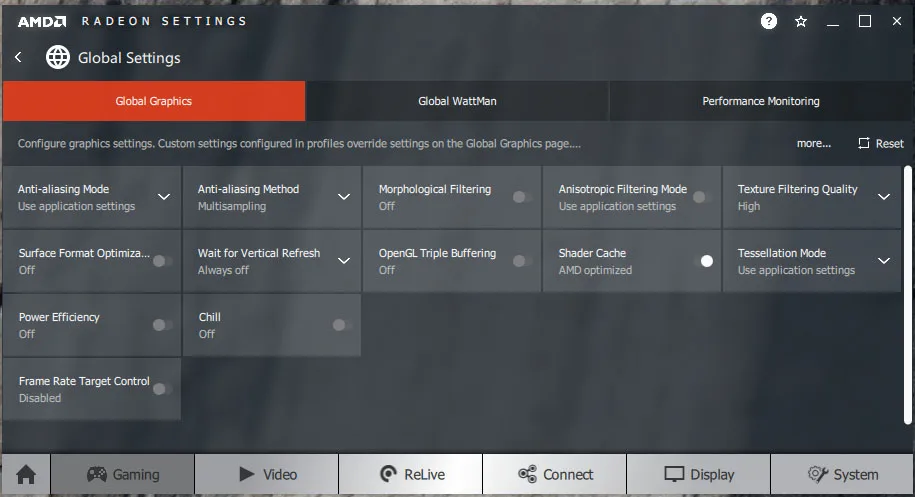 All AMD settings are set so as to be apples-to-apples when compared to NVIDIA’s control panel settings – all optimizations are off, Vsync is forced off, Texture filtering is set to High, and Tessellation uses application settings.
We use Wattman to set the Radeons’ power, temperature and fan settings to their maximums.
NVIDIA Control Panel settings
Here are the NVIDIA Control Panel settings that match AMD’s settings.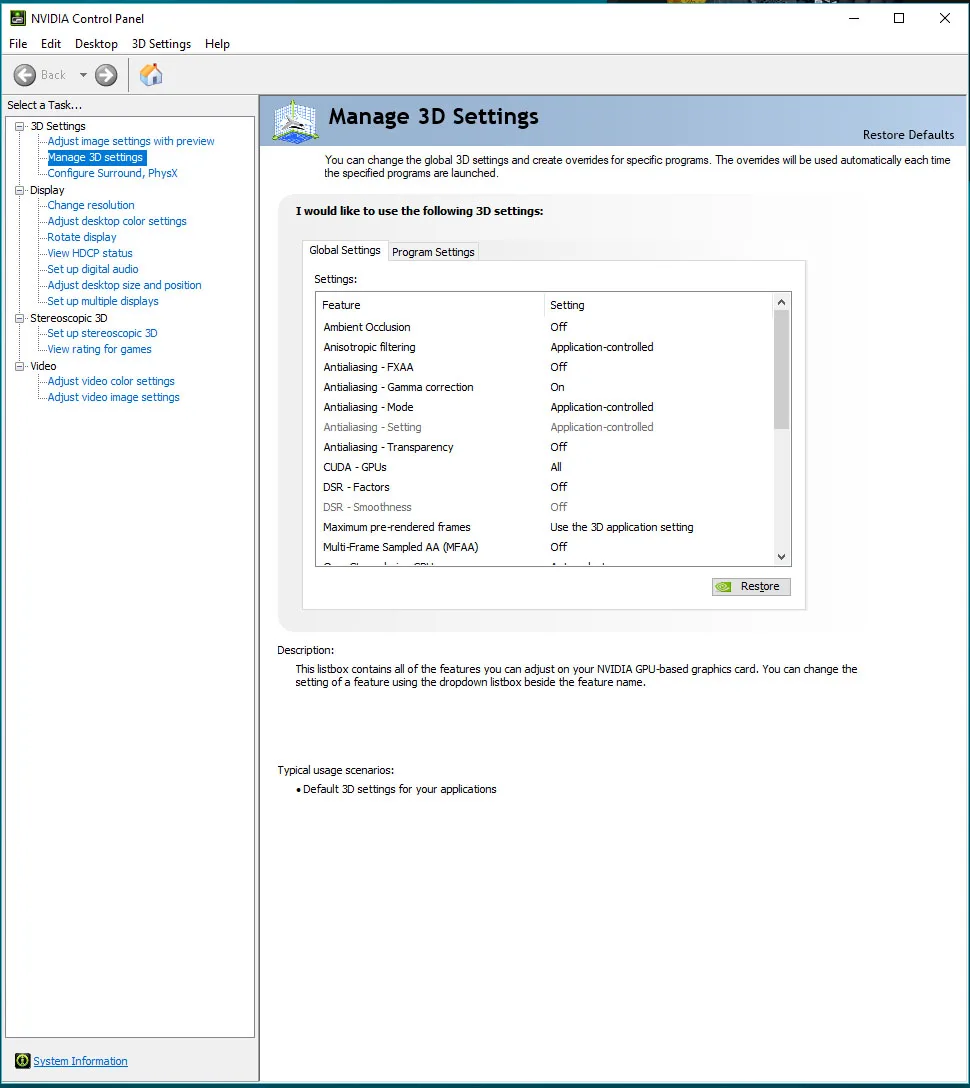
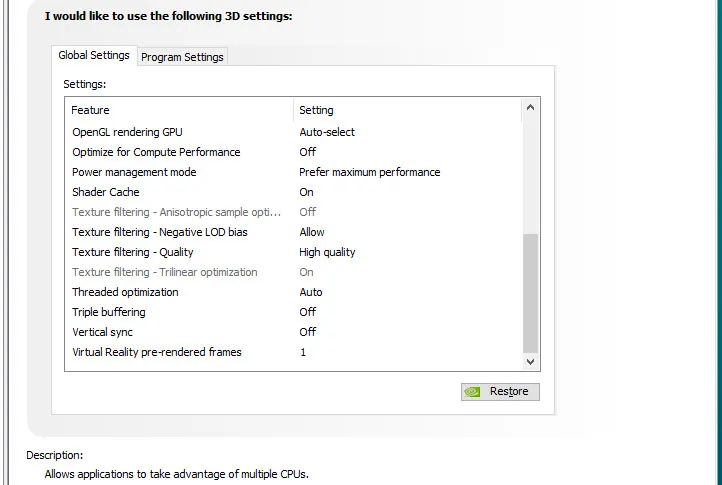 We used the latest beta of Afterburner to set all GeForces’ highest Power and Temperature targets. By setting the Power Limits and Temperature limits to maximum for each card, they do not throttle, but they can each reach and maintain their individual maximum clocks. This is particularly beneficial for higher power cards.
We had no time, so we will save overclocking, temperatures and noise for a follow-up review. Let’s check our RTX 2060 and 2070 SUPER’s performance compared with seven other cards using 40 games, and then head for our conclusion.
Performance Summary Charts
Here are the summary charts of 40 games and 3 synthetic tests. The highest settings are always chosen and the settings are listed on the chart. The benches were run at 1920×1080 and at 2560×1440.
Most results show average framerates and higher is better. Minimum framerates are next to the averages in italics and in a slightly smaller font. A few games benched with OCAT show average framerates but the minimums are expressed by the 99th percentile frametime in ms where lower numbers are better.
The Main Charts
This set of charts show the main competing cards’ performance – the RTX 2060 FE in the first column, the RTX 2060 SUPER in the second, the RTX 2070 FE in the third column, the RTX 2070 SUPER in the fourth column, and the RTX 2080 FE is in the fifth.
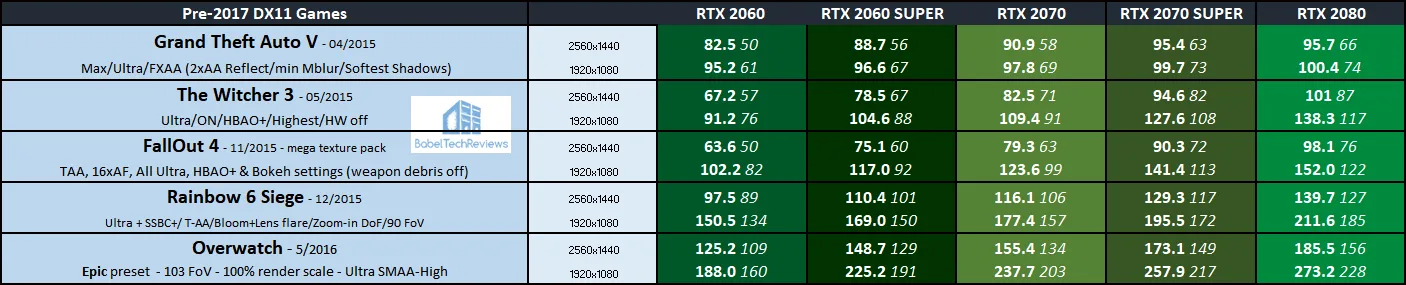
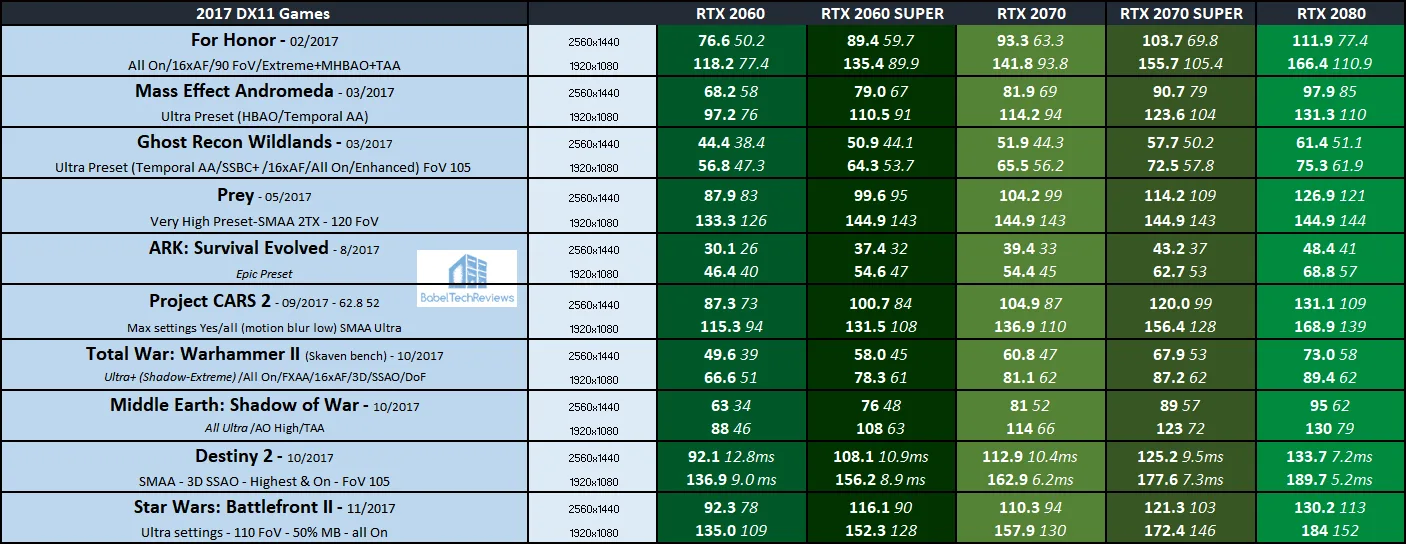
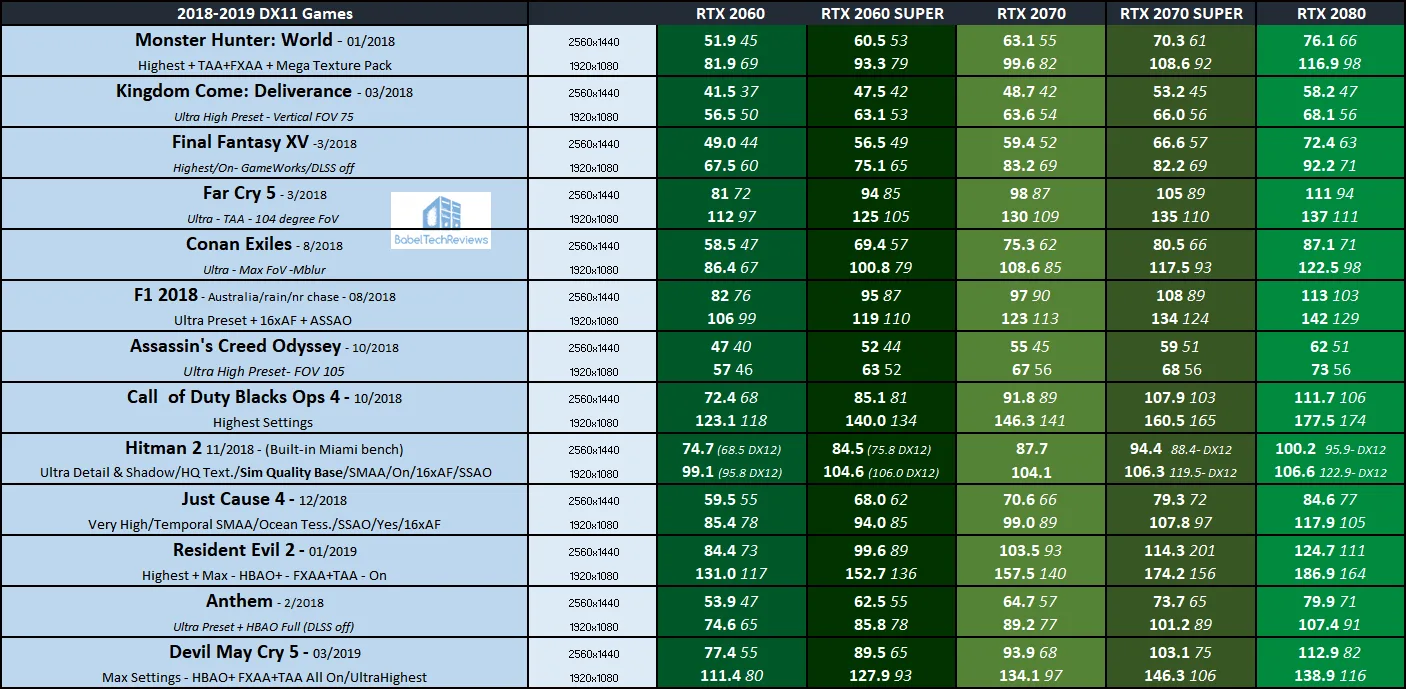
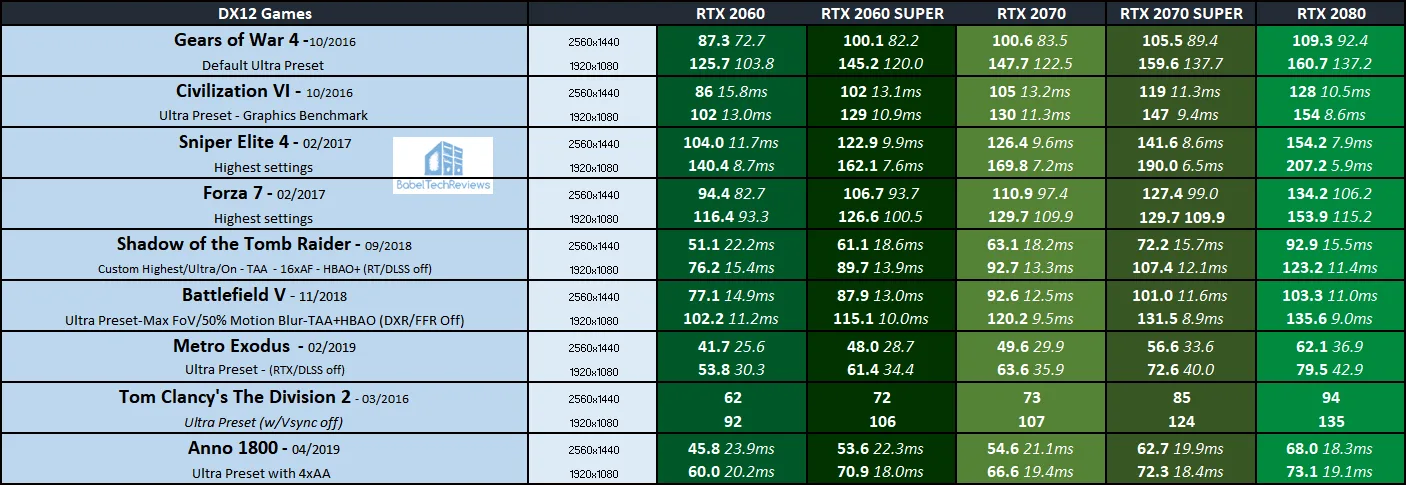
 We see a huge jump in performance from the RTX 2060 to the RTX 2060 SUPER but less of a leap with the RTX 2070 SUPER over the RTX 2070. The RTX 2070 SUPER now sits between the original RTX 2070 and the RTX 2080, but closer to the RTX 2080’s performance.
The Big Picture
The following chart is what BTR calls its “Big Picture”. The following chart uses the same SUPER performance numbers but places them into a larger benching suite with a total of nine cards on recent drivers. As always, open the individual images into separate tabs or windows for easier viewing.


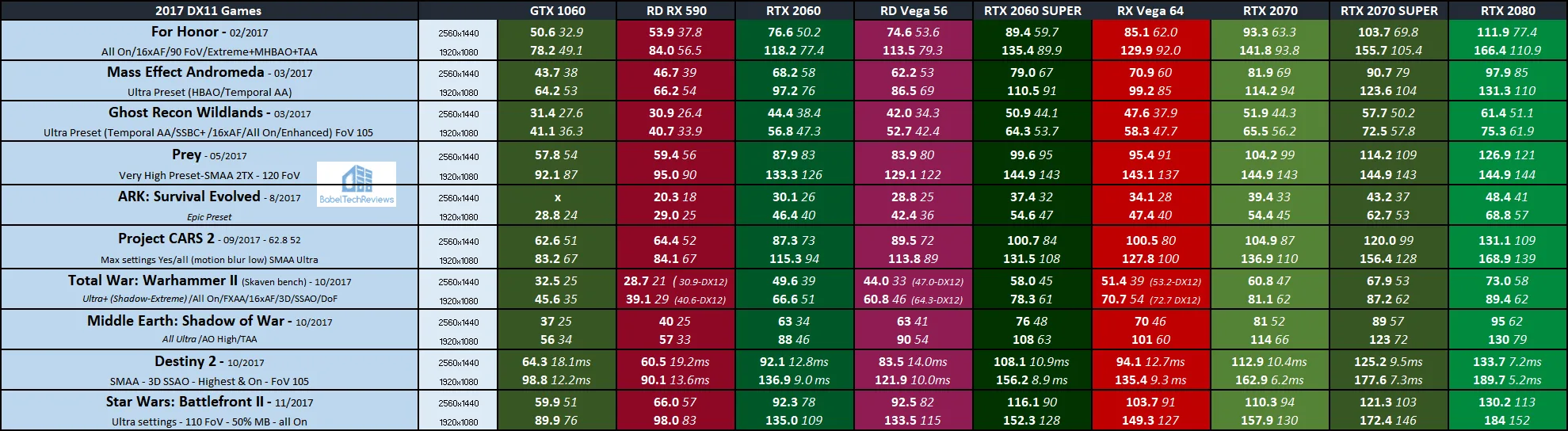
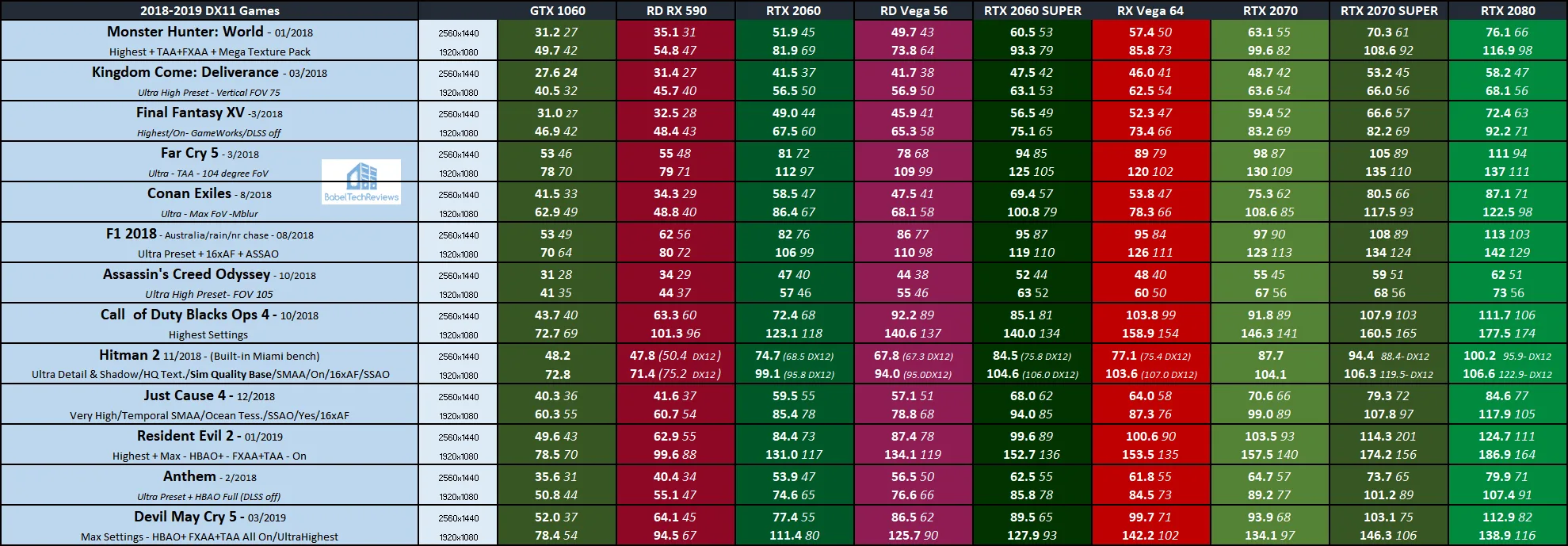
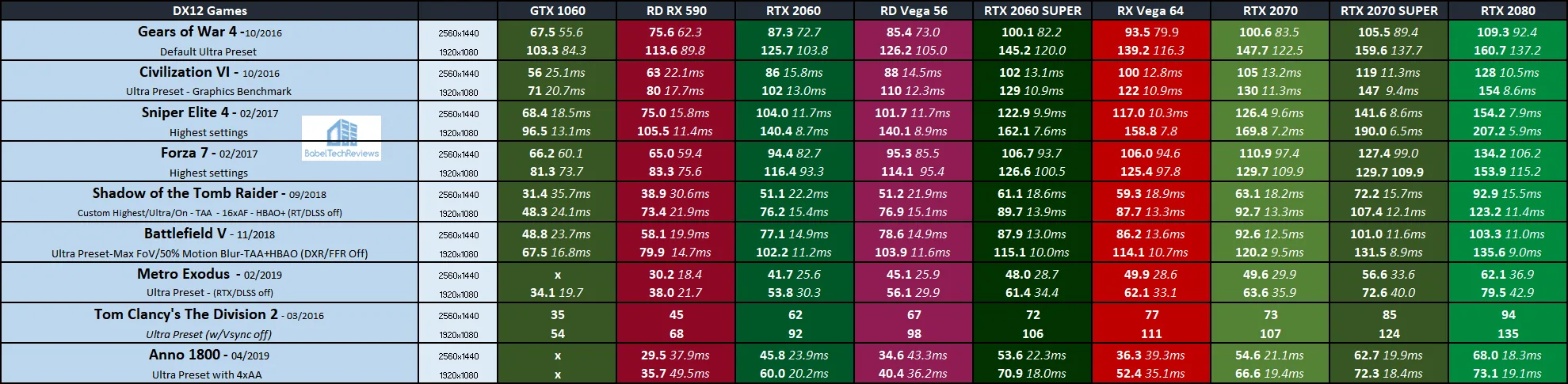
 Unlike with the original RTX 2060, the RTX 2060 SUPER wins most game benchmarks over the liquid-cooled RX Vega 64 showing it is very close to the original RTX 2070 FE performance. We are looking forward to benchmarking the RX 5700 XT to see where it stands in relation to all of these cards.
We did not have time to test a GTX 1080 Ti but expect it would be close in performance to a RTX 2070 SUPER. A RTX 2060 SUPER would be in turn faster than a GTX 1080. These super cards would make good upgrades from previous generations for gamers that want to experience ray tracing.
Conclusion
We are impressed with the $499 RTX 2070 SUPER upgrade with no price premium over the original card’s launch $499 prices. It now sits much closer to the RTX 2080 in performance. At $399, the RTX 2060 SUPER costs $50 more than the original RTX 2060, but it is almost as fast as the original RTX 2070 which launched at $499. And for gamers on a budget, the original versions may become more attractive as the market may lower prices for a time as they are phased out.
Both the RTX 2060 SUPER and the RTX 2070 SUPER Founders Edition are well-built, solid, and handsome, and in both cases, are a solid jump in performance over the original cards. A two-game bundle included with the SUPER cards sweetens the deal.
Pros
- The SUPER RTX cards offer solid performance increases over the original cards with no price premium increase for the RTX 2070 SUPER. The RTX 2060 SUPER at $399 is almost the performance equal of the original RTX 2070 which launched at $499.
- Starting on July 9, qualifying purchases of a GeForce RTX 2060 SUPER, GeForce RTX 2070 SUPER, or GeForce RTX 2080 SUPER- based graphics cards will include keycodes for digital copies of Control and Wolfenstein: Youngblood.
- RTX cards are able to take advantage of hardware accelerated ray tracing in current and upcoming ray traced games.
Cons
- None
The Verdict
If you are buying a fast video card right now and looking for excellent ultra 1920×1080 and/or 2560×1440 performance, the new SUPER cards offer solid upgraded performance over the originals.
We would like to award the RTX 2070 SUPER and the RTX 2060 SUPER BabelTechReviews’ Recommended Award . Turing brings important new features to PC gaming including RT and Tensor cores for hardware accelerated ray traced games.
With great forward-looking features, you can be assured of immersive gaming by picking these SUPER cards for 1440P or for VR. If you currently game on a older generation video card, you will do yourself a favor by upgrading to a SUPER or to an original RTX card.
Stay tuned, there is a lot more coming from us. We will shortly pit the RTX 2060 SUPER against the RX Vega 64 in an overclocking showdown this weekend and we are looking forward to seeing where the RX 5700 XT fits in terms of performance and value.
Tell us what you think in the comments below or on BTR’s forum.
Happy Gaming!