

It has been decades since the last proper entry in the Aero Fighters/Sonic Wings lineage, a series remembered by arcade fans for its quirky roster, snappy pacing, and no-nonsense vertical shooting. Sonic Wings Reunion attempts to revive that legacy for modern platforms while remaining aggressively faithful to its 1990s roots. In many ways, this return is admirable: it is unapologetically retro in structure and tone, and its developers clearly understand what made the original games appealing. However, that loyalty comes with shortcomings, and when presented as a modern, full-priced release, the package often feels underdeveloped, unevenly presented, and lacking the innovation that successful revivals typically incorporate.
A Familiar Blueprint With Expanded Characters
At its core, Sonic Wings Reunion is an arcade shooter through and through. It offers eight linear stages, a modest selection of power-ups, and a traditional second loop that dramatically increases enemy aggression and bullet density. The structure does not deviate from genre expectations, and fans who simply want the sensation of pushing through a brisk, tightly paced arcade gauntlet will find that experience intact.
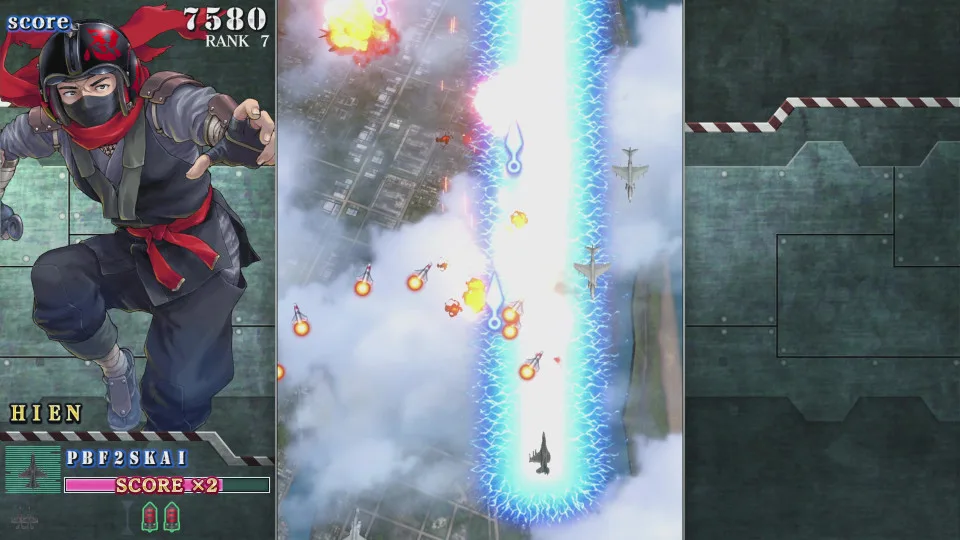
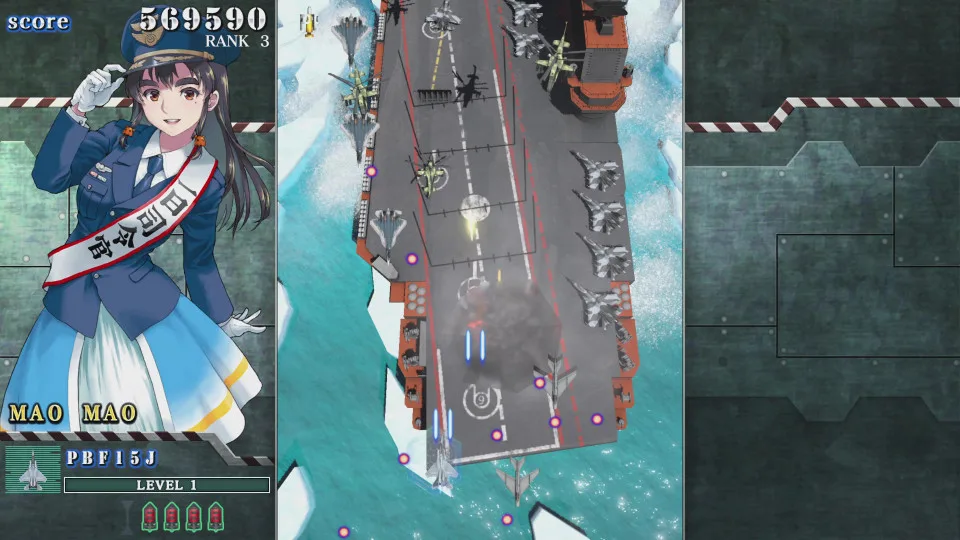
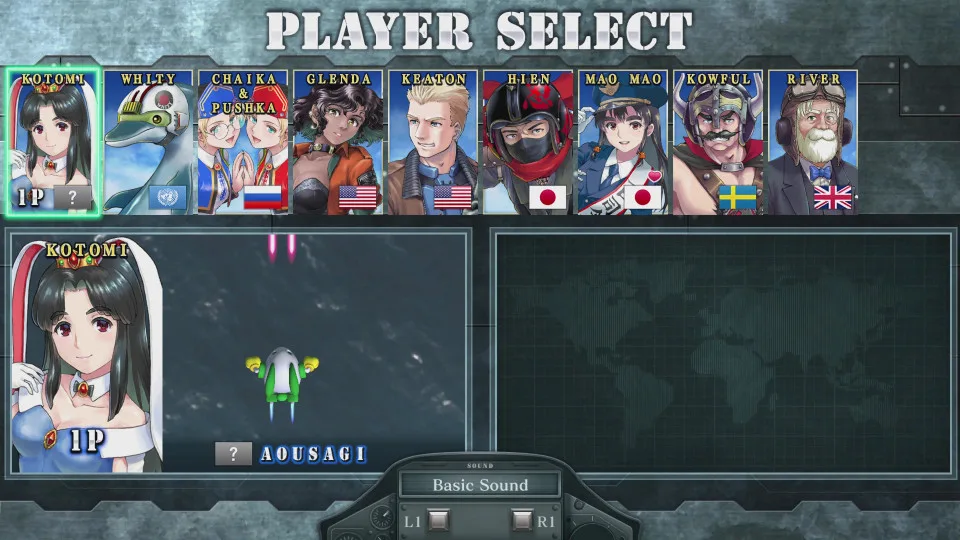
Where the game distinguishes itself is in its character roster. Reunion features an unusually large number of playable pilots, each with unique attack patterns and special weapons. Returning icons like Mao Mao and Hien maintain their classic feel, while newer characters add comedic flair or exaggerated national stereotypes that echo the tongue-in-cheek humor of the original series. While the fundamental shooting design remains basic, the roster variety genuinely expands replay value, as switching characters meaningfully alters how encounters are approached.
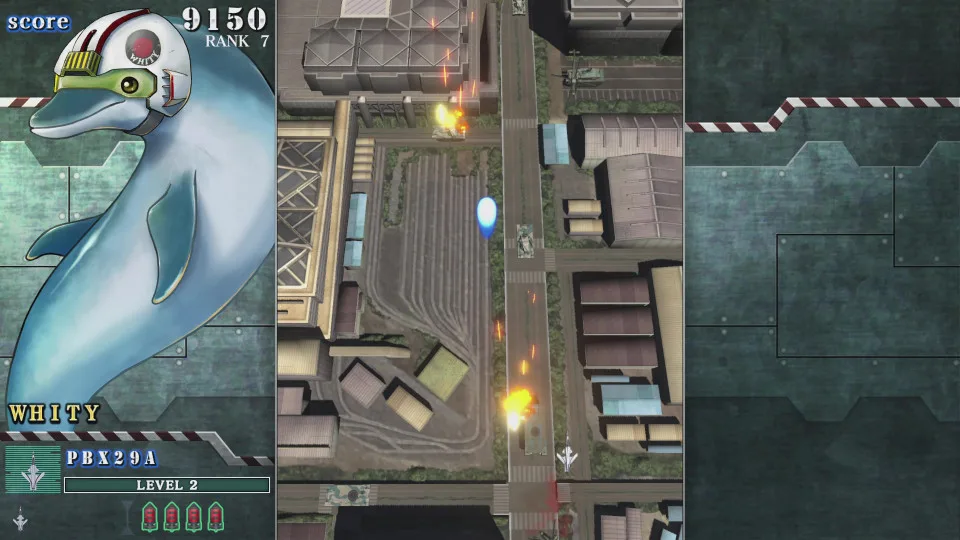
The inclusion of character-specific cutscenes and unique ending combinations further reinforces this personality-driven layer. These moments are brief and intentionally melodramatic, but they create a sense of identity that most shmups lack, and long-time fans will appreciate how devotedly Reunion embraces the series’ eccentric storytelling style.
Strong Audio Direction, Uneven Visual Presentation
The soundtrack is easily the high point of Reunion’s presentation. The option to toggle between the original music and a newly arranged sound mode provides players with two distinct tonal experiences. The arranged tracks, in particular, are energetic and modernized, frequently elevating the on-screen action. They are dynamic, well-produced, and consistently more ambitious than the rest of the package.
The visuals, however, are more contentious. Reunion adopts a clean, high-resolution art direction that attempts to modernize the original sprites with enhanced detail and effects. Unfortunately, this modernization introduces readability problems that fundamentally contradict the genre’s demands. Backgrounds often feature bold colors, animated elements, and excessive contrast, which makes it difficult to distinguish enemy bullets and smaller enemy units. Several reviewers and players have noted that the updated graphics worsen the experience rather than refining it. In bullet-critical titles, clarity is not optional—it is the genre’s foundation—and Reunion suffers for not prioritizing legibility over spectacle.
Content, Value, and the Limits of Nostalgia
Even for enthusiasts, it is difficult to ignore the thinness of the package. The core campaign lasts under an hour, and while the second loop, online leaderboards, and character-specific endings do provide a measure of replayability, there is nothing here that meaningfully expands upon what fans saw in the mid-1990s. In an era where shmup collections regularly include multiple full titles, bonus features, historical materials, challenge modes, and training toolkits, Reunion’s offering feels sparse.
Compounding this issue is its price point. Depending on format and edition, the game often ranges from $30 to $60 USD—an amount many consider disproportionate to the content offered. A more robust collection containing the classic Aero Fighters trilogy, expanded modes, or additional gameplay systems could have justified the cost. Instead, Reunion positions itself as a premium product while offering a retro experience with limited scope. That mismatch is central to why its reception has been mixed.
Mechanical Fidelity Without Mechanical Evolution
Reunion’s gameplay honors the traditional shmup formula, but it does not build upon it. There are no modern genre advancements such as graze mechanics, resource-based scoring systems, risk-reward power-up strategies, or dynamic difficulty scaling. What you get is a competent but conservative shooter that could have been released twenty years ago with a few adjustments. For purists, this may be enough. For players expecting a meaningful evolution or modernization, Reunion feels static and creatively cautious.
Final Verdict
Sonic Wings Reunion is a respectful, sometimes charming revival of a cult arcade series. Its roster variety, excellent arranged soundtrack, and humorous character interactions successfully recapture the eccentric spirit of Aero Fighters. Unfortunately, readability issues, limited content, and a high asking price prevent the game from reaching its full potential. It plays well enough, but it rarely distinguishes itself from the very titles that inspired it—and often feels like a modest expansion rather than a fully realized modern sequel.
Dedicated shmup fans will find enjoyment here, especially those nostalgic for the original series. Everyone else should wait for a discount or consider more substantial shmup offerings already available on modern platforms.
Sonic Wings Reunion: A faithful revival with charm and personality, but lacking the clarity, content, and innovation needed to truly soar. – Mario Vasquez
A copy of Sonic Wings Reunion was provided by the publisher.